For many SMEs, data still lives in spreadsheets, accounting tools, CRM systems, and SaaS platforms that don’t “talk” to each other. Reports are rebuilt every month, numbers don’t always match, and decisions depend on who owns which file. A data warehouse changes that.
A data warehouse is no longer a luxury reserved for large enterprises. With modern cloud platforms and scalable architectures, it has become affordable, flexible, and essential infrastructure for growing businesses that want to operate with confidence in 2025 and beyond.
Key takeaways
- A data warehouse centralizes your business data into one reliable source.
- SMEs benefit most when reporting is automated and consistent.
- The biggest ROI comes from cleaner data, faster decisions, and better KPI tracking.
What Is a Data Warehouse, Really?
A data warehouse is a central, structured repository where data from different systems is collected, cleaned, and organized for analysis and reporting. Instead of pulling numbers from separate tools, the warehouse becomes your single, reliable version of truth.
You can think of your operational systems as busy shops on different streets. A data warehouse is the logistics center where all deliveries arrive, get inspected, repackaged, and then shipped out neatly to whoever needs them – finance, sales, operations, or leadership.
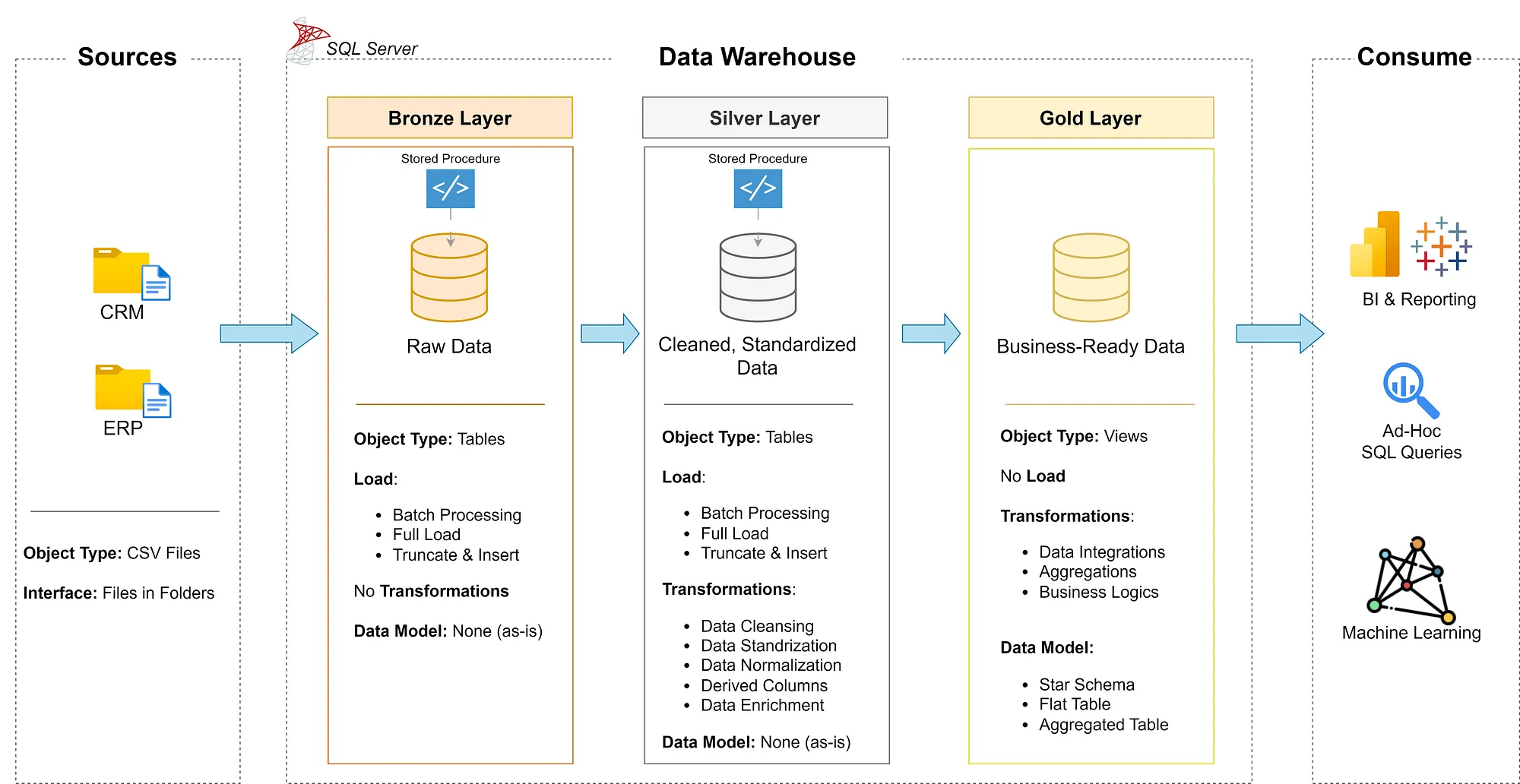
The data warehousing process generally involves:
- Data Ingestion: Bringing data from various sources (ERP, CRM, marketing tools, POS systems, spreadsheets, web apps) into a single pipeline.
- Data Transformation: Cleaning, standardizing, and joining data so that “customer” or “product” means the same thing across systems.
- Central Storage: Storing this prepared data in a performant, query-optimized environment – typically a cloud data warehouse.
- Analytics & Reporting: Connecting BI tools and dashboards so teams can explore metrics, trends, and insights in real time.
Why Data Warehousing Matters for SMEs in 2025
The way SMEs compete is changing. Customers expect fast responses, personalized experiences, and consistent service across channels. At the same time, leaders want clear visibility into performance without waiting for manual reports. A data warehouse underpins all of this.
1. One Source of Truth for the Whole Business
When sales, finance, and operations work with different numbers, meetings turn into debates about which report is correct. A data warehouse ensures that everyone sees the same KPIs and definitions – revenue, margin, churn, stock levels – so decisions can be made faster and with more confidence.
2. Better Decisions, Faster
Instead of waiting days for manual Excel reports, decision-makers can access near real-time dashboards built on the warehouse. They can slice data by country, channel, product, or segment, test scenarios, and react quickly to trends before competitors do.
3. Data That’s Ready for AI and Automation
AI and advanced analytics need high-quality, well-structured data. A warehouse gives SMEs a clean foundation for forecasting, churn prediction, recommendation engines, and other AI use cases – without months of manual data preparation each time.
4. Lower Operational Risk
When critical reports depend on individual spreadsheets, the risk is high: mistakes, missing files, or key people on holiday. A structured data warehouse reduces that risk by centralizing logic, calculations, and data lineage in one governed environment.
5. Scaling Without Losing Control
As SMEs grow, they typically add new tools, markets, and products. Without a warehouse, this growth multiplies data chaos. With a warehouse, new sources can be added systematically, keeping reporting stable and scalable as the business evolves.
6. Cost-Efficient Analytics with Cloud Technologies
Modern cloud data warehouses let SMEs pay for what they actually use. They combine strong performance with flexible pricing, so smaller companies can benefit from enterprise-grade analytics without enterprise-level budgets.
How Different Teams Use a Data Warehouse
A well-designed warehouse doesn’t just serve the boardroom. It supports people across your organization:
Sales & Marketing
Track funnel performance, campaign ROI, and customer lifetime value across channels.
Finance
Consolidate revenue, costs, and cash-flow data from multiple systems into consistent reports.
Operations & Supply Chain
Monitor stock levels, supplier performance, delivery times, and forecast demand more accurately.
Management & Strategy
View unified KPIs, compare scenarios, and align teams around the same set of performance metrics.

Getting Started with Data Warehousing as an SME
Building your first data warehouse doesn’t have to be a big-bang project. You can start small and grow:
- Clarify Your Business Questions: Identify the 5–10 key questions you want to answer consistently – revenue, margin, churn, stock, etc.
- Map Your Data Sources: List the tools and systems where relevant data currently lives and who owns them.
- Choose a Modern Data Platform: Select a cloud data warehouse and integration tools that match your size, budget, and growth plans.
- Start with a Focused Use Case: For example, build a sales & revenue dashboard first, prove value, then expand to other areas.
- Invest in Data Governance: Define owners, naming standards, and access rules so that data remains trusted as you scale.
Conclusion: A Data Warehouse Is the Backbone of Data-Driven SMEs
In a world where speed, accuracy, and personalization matter more than ever, a data warehouse gives SMEs the foundation they need to compete. It turns fragmented, inconsistent data into a reliable asset that supports daily decisions, strategic planning, and AI initiatives. For SMEs that want to grow confidently in 2025, investing in data warehousing isn’t just a technical upgrade – it’s a strategic move.
Want help implementing a data warehouse or BI dashboards? Visit our Services or Contact us.
About the author
Data Superheroes helps SMEs build analytics systems: data pipelines, warehouses, dashboards, and AI automation.